How to Get More Leads for Contractors With Better Quote Forms and Faster Follow-Up
Many contractors assume lead generation starts with getting more traffic. Sometimes it does. But a surprising number of service businesses already have enough visitors to create more opportunities. The real leak happens later, when the website asks too much, too soon, or when someone submits a form and hears nothing back for hours.
That is where better quote forms and faster follow-up change the math.
If you want to know how to get more leads for contractors without immediately pouring more money into ads, start with the handoff between interest and contact. A homeowner lands on your site, checks whether you serve their area, decides whether you look credible, and tries to reach you. Every extra field, every unclear service area, every slow mobile page, and every delayed callback gives them a reason to try the next company.
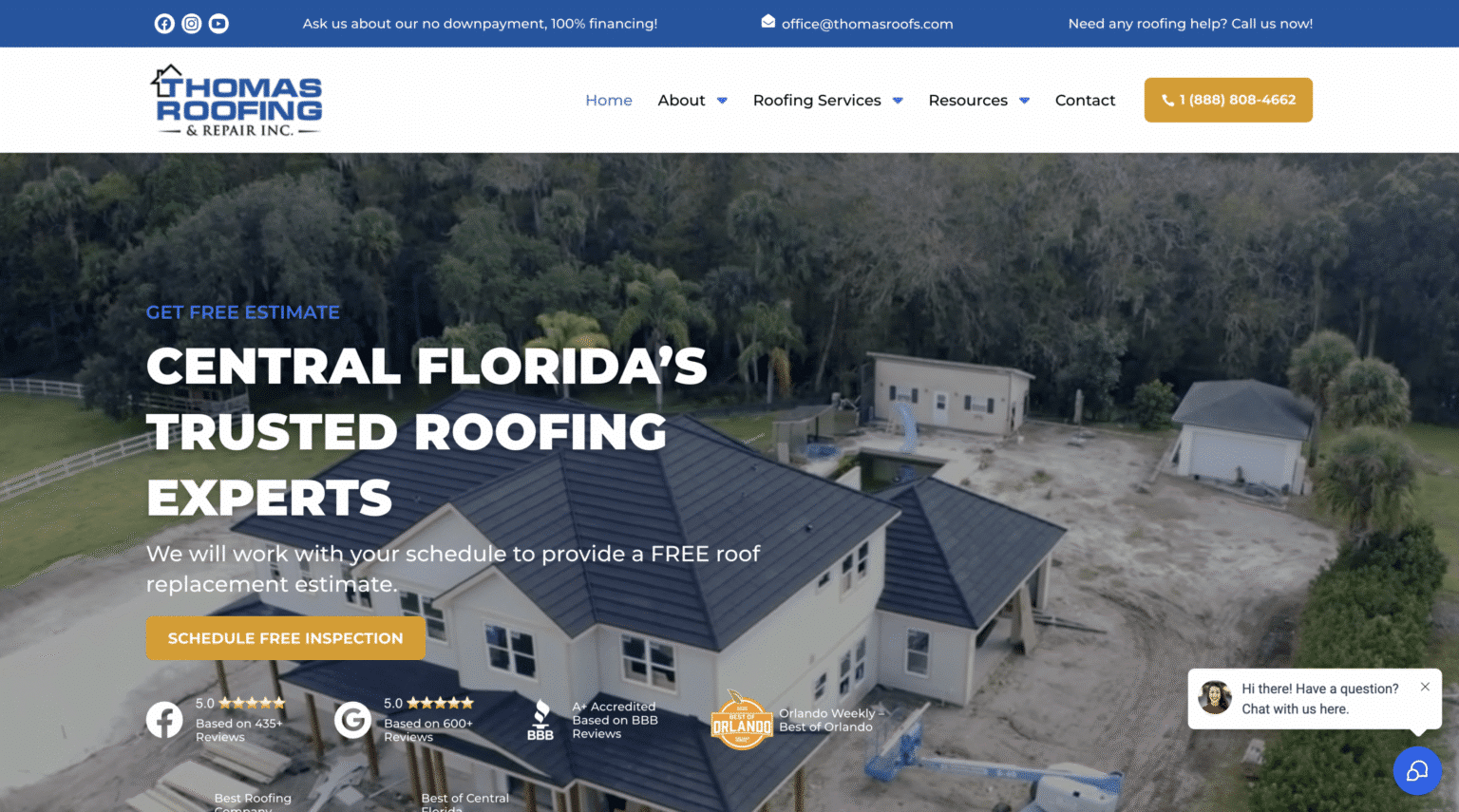
A contractor website that generates leads does not just look polished. It removes hesitation. It answers practical questions quickly. It makes contact easy from a phone. Then it gets back to people while the job is still fresh in their mind.
Where most contractor websites lose the lead
The pattern is familiar. A homeowner searches for help, often from a phone, often with some urgency. They might need a plumber, an electrician, a foundation repair crew, a water damage restoration company, or a remodeling estimate. They open three sites, maybe five. They are not grading branding details the way a designer would. They are looking for proof that you are real, local, responsive, and relevant to the job they need done.
If your form asks for a full project description, budget range, timeline, address, preferred appointment dates, and several optional details before they have even spoken to you, some people will quit. Not because they are bad leads, but because the form feels like work.
I have seen this issue across very different trades. A plumbing website design has to support urgent, often same-day outreach. An electrician website design may need to balance emergency calls with estimate requests for larger projects. Foundation repair website design usually involves higher-consideration leads, where trust and clarity matter more than fancy effects. Water damage restoration website design has almost no margin for delay because the person reaching out may be dealing with active damage. Kitchen and bath remodeling website design serves a longer sales cycle, but even there, the first interaction sets the tone. The same goes for solar company website design and fence contractor website design. Different trades, different buying windows, same basic truth: people contact the business that feels easiest to reach and fastest to respond.
That means your lead form is not an admin tool first. It is a conversion tool first.
A good quote form does less, not more
The best quote forms for contractors are usually shorter than owners expect. That can be uncomfortable because the office wants cleaner information before calling. On paper, that sounds efficient. In practice, long forms often reduce the number of people who ever reach the office in the first place.
A quote form should collect just enough to start a real conversation. In many cases, that means only the essentials:
- name
- phone number
- service address or ZIP code
- type of service needed
- short message
That is enough to qualify basic fit, check service area, and return the call with context. If your team needs photos, insurance details, property access notes, or measurements, those can come later. Asking for everything upfront often solves an internal process problem by creating an external conversion problem.
The service address or ZIP code matters for a reason. For service-area businesses, clarity about where you work is part of the buying decision. If someone is unsure whether you serve their area, they may not bother submitting. Your form, your service pages, and your Google Business Profile should point in the same direction. Google allows service-area businesses to set a service area and, if they do not serve customers at their address, to hide that address and show the service area instead. That matters because homeowners want confidence that you actually work where they live, not a vague claim that you cover “the entire region.”
A short form also performs better on mobile because it respects the setting the user is in. They may be standing in a wet basement, sitting in their car, or sneaking a quick search between meetings. Mobile convenience is not a nice-to-have. Google’s page experience guidance emphasizes mobile friendliness, HTTPS, and avoiding intrusive interstitials. If your quote form appears inside a clumsy pop-up that blocks content or behaves badly on a phone, you are making it harder for people to act.
Speed and clarity beat clever design
Contractors often ask whether design style matters. It does, but not in the way many agencies pitch it.
A contractor lead generation website should feel trustworthy, not complicated. That usually means clear service categories, prominent phone numbers, visible service areas, straightforward calls to action, and pages that load fast. Google recommends good Core Web Vitals, including LCP under 2.5 seconds, INP under 200 milliseconds, and CLS under 0.1. Most homeowners will never say those metrics out loud, but they absolutely feel the difference between a site that appears immediately and one that lags, shifts, or stutters while they try to tap a button.
I would take a simple, fast page over an elaborate, slow homepage almost every time for a local contractor.
This is where industry-specific judgment matters. A flashy gallery might make sense on a kitchen and bath remodeling website design, where homeowners want to imagine finishes and layouts. But even there, performance cannot collapse under the weight of oversized images. On a water damage restoration website design, the need for speed is even more obvious. The person on the page may not care about animations or transitions. They care about whether you answer. A fence contractor website design can often win with plainspoken copy, real project photos, and obvious contact paths. A solar company website design may need more explanation because the purchase involves more questions, but explanation is not the same thing as clutter.
Good design for lead generation is really an exercise in removing friction.
Why local search and quote forms need to work together
A website does not exist in isolation. For most contractors, local discovery and on-site conversion are one system.
A homeowner may find you through Search, Maps, your Google Business Profile, or a service page that matches the job they need. Google explains that a verified Business Profile helps customers find a business on Search and Maps and can show hours, phone number, website, and more. That means your profile often creates the first impression, while your website has to finish the job.
If your Google Business Profile says one thing and your website says another, hesitation creeps in. Maybe your hours are unclear. Maybe your service area is vague. Maybe your website does not show the same phone number or the service categories are hard to match. These sound like small details, but in local service work, small details create trust or break it.
For contractors trying to improve local SEO for home service businesses, one of the most practical steps is to make service areas specific and consistent. Google recommends keeping service areas accurate and defining them by cities, ZIP codes, or other places served. That guidance matters on your website too. A generic line like “serving the greater metro area” is weaker than specific cities and ZIP codes that match what people actually search.
This is also where service pages earn their keep. A plumbing website design should make it easy to reach relevant pages for the actual work offered. The same goes for electrician website design, foundation repair website design, or remodeling. Those pages do not need to be stuffed with repetitive city names. They need to be useful, accessible, and indexable. Google’s technical guidance is simple on this point: if pages are blocked or not publicly accessible, they cannot be indexed properly. Contractors sometimes invest in pages they accidentally hide from search engines through technical mistakes, then wonder why rankings stall.
The best follow-up window is the one you do not miss
A quote request has a short shelf life.
That is not a dramatic statement. It is just how people behave. When someone needs a contractor, especially for local service work, they often contact multiple businesses close together. If you wait too long, you are not calling a warm lead anymore. You are calling someone who may already be booked, distracted, or tired of repeating the same details.
Google’s own guidance around local service leads reflects how much response handling matters. Missed-call handling can affect whether an interaction qualifies as a lead in some Google products, and Google also supports replying quickly to leads from its interfaces. The broader lesson for contractors is straightforward: responsiveness is part of lead generation, not a separate office task after the marketing work is done.
Fast follow-up does not mean rushed or robotic. It means the customer feels the business is present.
A practical standard looks something like this:
- send an immediate confirmation after form submission
- call as soon as possible when the request arrives
- if the first call is missed, try again promptly
- use the customer’s requested contact method when possible
- keep handoff notes short and clear for the office or estimator
The confirmation matters because it reassures the customer that the request went somewhere real. The call matters because many questions are easier to sort out in two minutes of conversation than through three more emails. The second attempt matters because homeowners miss calls for ordinary reasons. They are driving, at work, or talking to another contractor. A missed first attempt should not automatically end the sequence.
The tone of follow-up also matters. “We got your form. Do you still need help?” is weak. “We received your request for an electrical panel estimate in the 770xx area and can speak now or set a time today” is much stronger. It shows you paid attention and gives an easy next step.
Reviews do not replace response time, but they support it
A lot of contractors think about reviews only in terms of rankings. They matter just as much for contact confidence.

Google says reviews should reflect genuine experiences and that businesses may ask customers to leave reviews, including through a direct review link or QR code, but cannot offer incentives. It also recommends responding promptly. For contractors, that guidance translates into a simple operating principle: ask consistently, ask ethically, and respond like a professional.
A homeowner comparing three businesses may not study every review. But they will often notice volume, recency, and whether the business replies. A business with current, authentic reviews and timely responses feels active. That supports the trust your quote form is trying to capture.
The common mistake is collecting reviews while ignoring the rest of the journey. A strong Google Business Profile for contractors helps discovery. Good reviews help credibility. But if the site is slow, the form is clunky, or nobody calls back quickly, those earlier wins never turn into booked work.
Service pages should pre-qualify without turning people away
The best websites do a quiet but important job before the form is ever submitted. They help the right people feel confident enough to reach out, and they help the wrong-fit inquiries self-sort.
That is especially useful for trades with varied job types. Foundation repair leads may need to understand what kinds of structural concerns you inspect. Remodeling leads may need clarity on whether you handle full projects, certain room types, or only a defined service area. Solar leads may want to know whether you focus on residential systems in specific locations. Fence buyers may need to identify whether you install, replace, or repair.
Pre-qualification does not require hard gating. It requires clarity. A page can explain service area, the category of work offered, and the best next step. That supports better lead quality without burdening the form.
This is one reason specialized pages often outperform generic “services” pages. Not because of keyword stuffing, but because they align intent. Someone searching for contractor help is usually not looking for abstract branding. They are looking for signs that you handle their problem in their area.
Technical details that quietly affect lead flow
Some of the highest-impact fixes are not visible to customers until they go wrong.
If important pages are not publicly accessible, they may not be indexed properly. If local business details are inconsistent or hard for search engines to interpret, you miss opportunities to reinforce your relevance. Google provides local business structured data for information like business hours, address, phone, departments, and more. For contractors, this is useful because it helps search engines understand the local context of the business.
Structured data will not save contractor web design company a weak site on its own, and it is not a substitute for content or reputation. But when the basics are already solid, it helps tighten the signal. Think of it as reducing ambiguity.
The same goes for security and usability. HTTPS is part of page experience guidance for a reason. People are less likely to trust a site that throws warnings or behaves unpredictably. Intrusive interstitials can also interfere with the main content. Contractors sometimes install aggressive pop-ups because they want more conversions. Ironically, those overlays can make a site harder to use, especially on mobile, and work against the result they wanted.
Different trades need different emphasis, but the same discipline
The phrase “contractor website that generates leads” sounds broad, and it is. But the execution should not be generic.
A plumbing website design often needs immediate-call pathways because urgency is common. An electrician website design may need clear separation between urgent service and planned estimate requests. Foundation repair website design benefits from educational clarity and trust signals because the job can feel intimidating to homeowners. Water damage restoration website design should reduce delay everywhere because timing is sensitive. Kitchen and bath remodeling website design needs enough detail and visuals to support a higher-consideration purchase without slowing the site to a crawl. Solar company website design usually has to answer more up-front questions before a contact feels comfortable. Fence contractor website design tends to win when it is direct, local, and easy to navigate.
Different emphasis, same discipline: be clear, be fast, be local, and respond quickly.
That is also why copying another contractor’s site rarely works as well as owners hope. A form that makes sense for a remodeler might be too heavy for a restoration company. A gallery-forward layout that suits kitchen projects may distract from the urgent contact path needed for plumbers or electricians. Good contractor lead generation website strategy matches the buying context.
What to tighten first if your traffic is decent but leads are weak
When a site gets traffic but not enough calls or form submissions, I would not start by rewriting every page. I would start where friction is most likely.
Look at whether the site loads quickly on mobile and whether the main contact actions are easy to find. Check whether the service area is clear and consistent with your Google Business Profile for contractors. Review whether the quote form asks only for what is necessary. Confirm that important pages are accessible and indexable. Then examine response time. If the business takes hours to call back, the problem may not be top-of-funnel at all.
This is where owners sometimes get disappointed because the answer is operational, not just promotional. They want a new campaign. What they may need first is a shorter form and a faster callback process.
The good news is that these are usually fixable problems. They do not require guessing at trends or chasing every new platform. They require discipline in the fundamentals.
Leads grow when friction drops
The contractors who consistently win more inquiries online are not always the ones with the flashiest sites. More often, they are the ones whose websites respect the customer’s time and whose teams treat follow-up like part of the sale.
That is the practical answer to how to get more leads for contractors. Build a site that is easy to understand, easy to use on a phone, and easy to contact. Make your local presence accurate, especially your service area and Business Profile. Keep pages accessible and technically sound. Ask for reviews the right way and respond to them. Then close the gap between inquiry and response as much as possible.
When those pieces work together, quote forms stop being dead inbox collectors. They become what they should have been all along, a clean handoff from intent to conversation.