How Contractors Can Use Business Hours, Phone, and Local Business Details to Support Local SEO
A lot of contractors chase local SEO with the big-ticket items first. They think about page titles, backlinks, before-and-after galleries, maybe a fresh round of city pages. Those things matter, but they often overlook the details that directly shape whether a prospect trusts the business enough to call.
Business hours, the right phone number, a clean service area, and consistent local business details do more than fill out a profile. They tell Google what the business is, where it operates, and whether it is reliable enough to show to nearby searchers. Just as important, they help real people make a fast decision when they need a plumber, electrician, remodeler, or restoration company now, not next week.
That matters because local search is often a decision under pressure. A homeowner with water in the basement is not conducting a lengthy vendor review. A property manager who needs an electrician is scanning search results on a phone between calls. A family pricing a kitchen remodel may spend longer comparing options, but even then, they usually eliminate businesses quickly when basic details look incomplete or confusing.
I have seen solid contractors lose leads simply because their public business details created friction. The company did good work. The website looked decent. Rankings were not terrible. But the hours were outdated, the phone number on the site did not match the business profile, or the service area suggested they covered half the state. Those are small errors on paper. In local SEO, they can be expensive.
Why these details carry more weight than most contractors expect
Google makes it clear that a verified Business Profile helps customers find a business on Search and Maps and shows practical information such as hours, phone, and website. For contractors, that is not a side issue. It is often the first layer see their work of the sales process.
Think about how a typical local search result is consumed. A homeowner sees the business name, review signals, phone number, open hours, and website link before they ever read a service page. If those details are complete and believable, the business gets considered. If they are inconsistent or sparse, trust drops before the visitor even lands on the website.
This is one reason local SEO for home service businesses is so different from broad organic SEO. The goal is not just visibility. The goal is qualified action. A contractor website that generates leads has to work hand in hand with local business information that removes doubt and helps a customer act.
For a plumber, that may mean showing accurate availability during emergency-prone hours. For an electrician, it may mean making the primary phone line easy to find and making sure it matches everywhere customers look. For a foundation repair company, it may mean precise service areas so homeowners in the right markets know the company actually serves them. For a remodeler, it may mean clear weekday hours and a website that reflects them consistently.
Start with your Google Business Profile, not your homepage
Many contractors still treat their website as the center of the local search universe. In practice, the Google Business Profile for contractors often acts as the front door. Searchers can call from it, click to the site from it, and judge legitimacy from it in seconds.
Google allows service-area businesses to use one central office or location and define service areas. If customers do not meet the business at the address, the address should be hidden and the profile should instead show a phone number or website representing that location. That matters for contractors because many operate from offices, warehouses, or home-based locations where customer visits are rare or not appropriate.
I have watched businesses create confusion by displaying addresses as if they were retail storefronts, even when no one should show up there. It frustrates customers and can muddy the local signal. A cleaner setup is usually the stronger one: one legitimate location, service areas that reflect where crews actually work, and contact information tied to that location.
Service areas should also be specific and accurate. Google supports defining them by cities, ZIP codes, or other areas served. The key word is accurate. Contractors sometimes assume broader is better and try to claim every surrounding market, but vague coverage can work against them. If your crews regularly serve three counties but only occasionally take work in two more, your public footprint should reflect the real operating territory. Precision usually builds more trust than exaggeration.
Business hours do more than answer “are you open?”
Hours affect both user behavior and platform trust. A prospect wants to know whether someone can answer the phone, but Google also uses that information to present businesses appropriately on Search and Maps.
For contractors, hours need judgment. Not every trade operates the same way, and there is no single best setup. A water damage restoration company may have reason to emphasize broader phone availability than a kitchen and bath remodeling website would. A fence contractor may answer calls during standard business hours even if crews are on site earlier. A solar company may prioritize daytime consultations and longer weekday windows.
The mistake is treating hours as decorative. They should reflect the real customer experience. If the profile says open until 8:00 p.m. But calls roll to voicemail at 5:15, prospects notice. If the website says one thing and the Business Profile says another, trust slips. If a company shortens holiday or seasonal availability and never updates it, frustrated searchers may not try a second time.
From an SEO standpoint, accurate hours support better local relevance and better engagement. From a lead generation standpoint, they reduce wasted clicks. Both matter if you are serious about how to get more leads for contractors.
The phone number is not a minor field, it is part of the conversion path
A contractor can spend thousands on plumbing website design or electrician website design and still underperform if the phone setup is messy. Phone details are one of the shortest paths from search to revenue. They need the same care as a landing page.
Google’s guidance for Business Profiles emphasizes that customers can use the profile to call the business. That puts pressure on two things: the number itself and the response process behind it.
Use a phone number that represents the individual location shown in the profile. Keep it consistent on the website and other business references. Then make sure someone can actually respond quickly when calls come in. Google’s lead handling guidance also underscores that missed-call handling matters, and quick replies to leads are supported within Google’s systems. Even outside paid products, the lesson is obvious: speed matters.
Contractors sometimes focus too narrowly on rankings and not enough on call handling. A company may ask why traffic is up but booked jobs are flat. One frequent answer is simple. The site and profile generated the lead, but the business did not make the handoff easy. Calls went unanswered, voicemail was full, or the public number forwarded to a line no one monitored.
That is not just an operations problem. It is a local marketing problem.
Your website should echo the same local facts, clearly and publicly
Google’s technical guidance says pages have to be publicly accessible and not blocked in order to be indexed. That sounds basic, but it matters because contractors sometimes tuck essential local details into image files, popups, or sections that are hard for search engines to understand. Others accidentally block important pages or bury contact information so deeply that users struggle to find it.
Your website should reinforce the same local facts that appear in your Business Profile. If you serve customers at their property rather than at your office, the site should make that operating model clear. If you have standard office hours and a different emergency response process, explain that in plain language. If you serve specific cities or ZIP codes, those service areas should show up logically on the site.
This is where a contractor lead generation website separates itself from a brochure site. A brochure site talks about the company. A lead generation site helps search engines understand the business and helps users take the next step without doubt.
That principle applies across trades. Foundation repair website design should make service territory and contact paths obvious because customers often come in with urgency and concern. Water damage restoration website design needs even less friction, especially on mobile. Kitchen and bath remodeling website design may support a longer buying cycle, but the trust signals still start with basics like business hours, local service areas, and a clear phone line. The same pattern holds for solar company website design and fence contractor website design, even though the sales process is different.
Structured data helps Google understand the details you are already showing
One of the most overlooked technical improvements for local businesses is local business structured data. Google supports markup for local business information such as business hours, departments, address, geo details, and phone numbers. This does not replace strong on-page content or a complete profile, but it helps Google interpret the details already present.
For contractors, that means the practical information on your contact page or footer can do double duty. It helps users, and it can also be marked up in a way that supports search engines’ understanding of the business.
This only works if the information itself is sound. Structured data cannot rescue sloppy local details. If the website says one set of hours, the profile shows another, and a third-party listing has an old number, marking up the wrong information just formalizes the confusion. Clean facts come first. Markup comes second.
Mobile performance shapes whether those local details actually convert
A fast, mobile-friendly website is not separate from local SEO. It is part of the experience that turns local visibility into calls and form submissions.
Google recommends strong Core Web Vitals for Search success, with targets such as largest contentful paint under 2.5 seconds, interaction to next paint under 200 milliseconds, and cumulative layout shift under 0.1. Google also points to broader page experience factors like mobile friendliness, HTTPS, and avoiding intrusive interstitials that get in the way of main content.
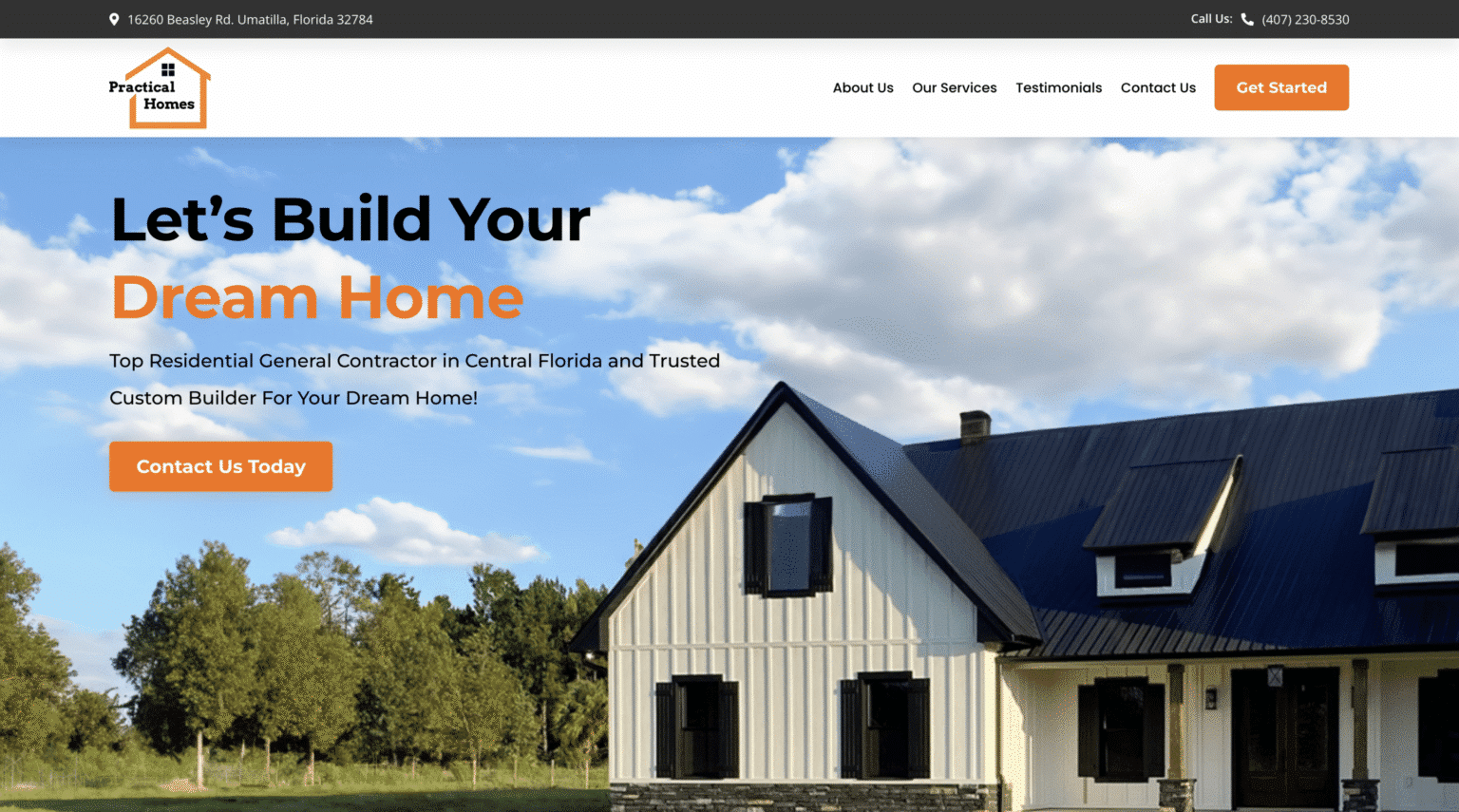
For contractors, the practical takeaway is simple. If a homeowner taps your listing and your contact page loads slowly, jumps around, or hides the phone number behind a popup, your business details lose value. They may be technically present, but they are not helping the visitor act.
This shows up constantly on local service sites. A remodeling site with oversized hero images pushes the phone number below the fold. A plumbing website design adds an aggressive pop-up before the user can read the page. An electrician website design uses a sticky element that covers the call button on smaller screens. A restoration site loads so slowly on mobile data that the prospect backs out and calls the next result.
Local SEO is not just about being found. It is about being usable once found.
Reviews strengthen the credibility of your local details
Reviews do not replace accurate business information, but they amplify it. Google’s guidance allows businesses to ask customers for reviews, use a review link or QR code, and respond promptly. Reviews must reflect genuine experiences, and incentives are prohibited.
That matters because reviews often validate the practical claims made by a profile and website. If your profile shows service in a certain city and recent reviewers mention jobs there, the footprint feels real. If your hours suggest responsiveness and reviewers mention fast communication, the listing gains credibility. If your phone line is easy to use and your team follows up promptly, that experience often surfaces in review language.
The reverse is also true. If a contractor has complete business details but poor responsiveness, reviews tend to reveal the gap. That is why local business details and operational discipline have to match.
A smart review process is not complicated. Ask after a real job is completed, make it easy, and respond promptly. Keep it honest. Contractors who try to game this usually create more problems than they solve.
Common friction points that cost local leads
The contractors who struggle with local search often do not have one catastrophic problem. They have several small ones stacked together. That stack creates hesitation for customers and mixed signals for Google.
Here are the issues I see most often:
- Hours that are outdated or inconsistent between the Business Profile and the website.
- A phone number that changes across platforms or forwards to a line with slow follow-up.
- Service areas that are too broad, too vague, or not aligned with where crews actually work.
- A website that is technically accessible but slow, cluttered on mobile, or hard to use.
- Reviews that are rarely requested, poorly managed, or contradicted by the customer experience.
None of these is glamorous. All of them affect leads.
Service-area pages should support, not contradict, your local details
Many contractors build city pages to improve visibility across their territory. That can be useful, but only if those pages line up with the business details in your profile and contact information.
If your Business Profile says you serve certain cities or ZIP codes, your site should support that clearly. If you build service pages for locations far outside the stated service area, you create tension between the site and the profile. That does not help trust.
This is where trade-specific website strategy matters. Foundation repair website design often benefits from service-area clarity because customers want to know the company regularly handles jobs in their area, not just occasionally. Water damage restoration website design needs fast confirmation that emergency service reaches the neighborhood in question. Kitchen and bath remodeling website design can go deeper into project types and service regions, but the local footprint still needs to be believable. Solar company website design may involve broader territories, though the public service area still should remain specific and defensible.
The strongest service-area pages tend to sound like operations, not wishful thinking. They reference real service coverage, not speculative expansion. They help a homeowner understand, quickly, whether the company works there and how to get in touch.
A practical way to tighten this up without overhauling everything
Contractors sometimes assume fixing local SEO means rebuilding the entire site. Often it starts with a coordinated cleanup of business details across the assets you already control.
A focused pass usually looks like this:

- Review your Google Business Profile and confirm the business name, phone, website link, hours, and service area are accurate.
- Compare those details against your website, especially the contact page, footer, and key service pages.
- Make sure the website pages you want indexed are publicly accessible and not blocked.
- Improve mobile usability so the phone number, hours, and contact paths are easy to use on a small screen.
- Add or refine local business structured data so Google can better understand the business details already shown on the site.
This is not flashy work, but it often produces a cleaner lead path faster than launching a whole new content campaign.
What this looks like in real contractor marketing
Picture two companies in the same metro area.
The first has a respectable site and several service pages. Its Google Business Profile shows broad service coverage, but the website only mentions a few cities. The phone number in the footer is different from the one in the profile. Hours on the profile say open late, yet calls after 5:00 p.m. Go unanswered. The mobile site loads slowly and a popup appears before the user can tap the contact button.
The second company has a simpler site, but the local details are aligned. The profile is verified. The hours reflect reality. The service area is specific. The same phone number appears on the profile and website. The contact page is easy to load and use on mobile. Reviews are requested appropriately and answered promptly.
In a lot of markets, the second company will outperform expectations because it creates less friction from search to call. That is the core lesson for how to get more leads for contractors. Better local SEO is often the result of better local clarity.
The businesses that win locally tend to be the easiest to understand
Contractors sometimes want local SEO to be mysterious because mystery suggests a hidden trick. Most of the time, there is no hidden trick. There is a business that is easy for Google to interpret and easy for customers to contact.
That means a verified profile built the right way for a service-area business. It means accurate hours. It means a stable phone number that someone answers or returns promptly. It means service areas that reflect where work really happens. It means a website that is accessible, mobile-friendly, secure, and fast enough to keep a prospect moving. It means local details on the site are not just visible to people but understandable to search engines as well.
For contractors investing in a contractor lead generation website, that foundation should come before a lot of the fancier tactics. Whether you are reviewing plumbing website design, electrician website design, foundation repair website design, water damage restoration website design, kitchen and bath remodeling website design, solar company website design, or fence contractor website design, the same rule applies.
Get the local facts right first. Then make them easy to find, easy to trust, and easy to act on.
That is not a shortcut. It is usually the work that makes the rest of local SEO worth doing.