A Home Service Website Is Not Just a Brochure: How to Build for More Calls and Quote Requests
A lot of contractor websites look fine at first glance. The logo is there. The phone number is somewhere near the top. There are a few photos, a contact page, maybe a paragraph about being family-owned and serving the community.
And yet the site does not pull its weight.
That gap matters more than most owners realize. A home service website is not there to admire itself. It has a job. It needs to help a stressed homeowner decide, quickly, that you are the right company to call, text, or message right now. If it fails at that, the visitor does not usually send feedback. They just leave and contact the next company.
I have seen this across roofing, HVAC, plumbing, electrical, remodeling, landscaping, pool building, and fire protection. The businesses that win more web leads are not always the ones with the fanciest branding. Usually, they are the ones whose websites make the next step obvious and easy.
That is the real shift in thinking. Your site is not a digital brochure. It is part salesperson, part dispatcher, part trust-builder, and part intake coordinator.
The first ten seconds decide more than owners think
When someone lands on your website, they are usually trying to answer a few basic questions fast.
Do you do the kind of work I need?
Do you serve my area?
Can I trust you in my home or on my property?
How do I contact you right now?
If the homepage buries those answers under stock images, vague slogans, or long blocks of text, you lose momentum. A homeowner with no AC in July or a water leak under the slab is not in the mood to hunt.
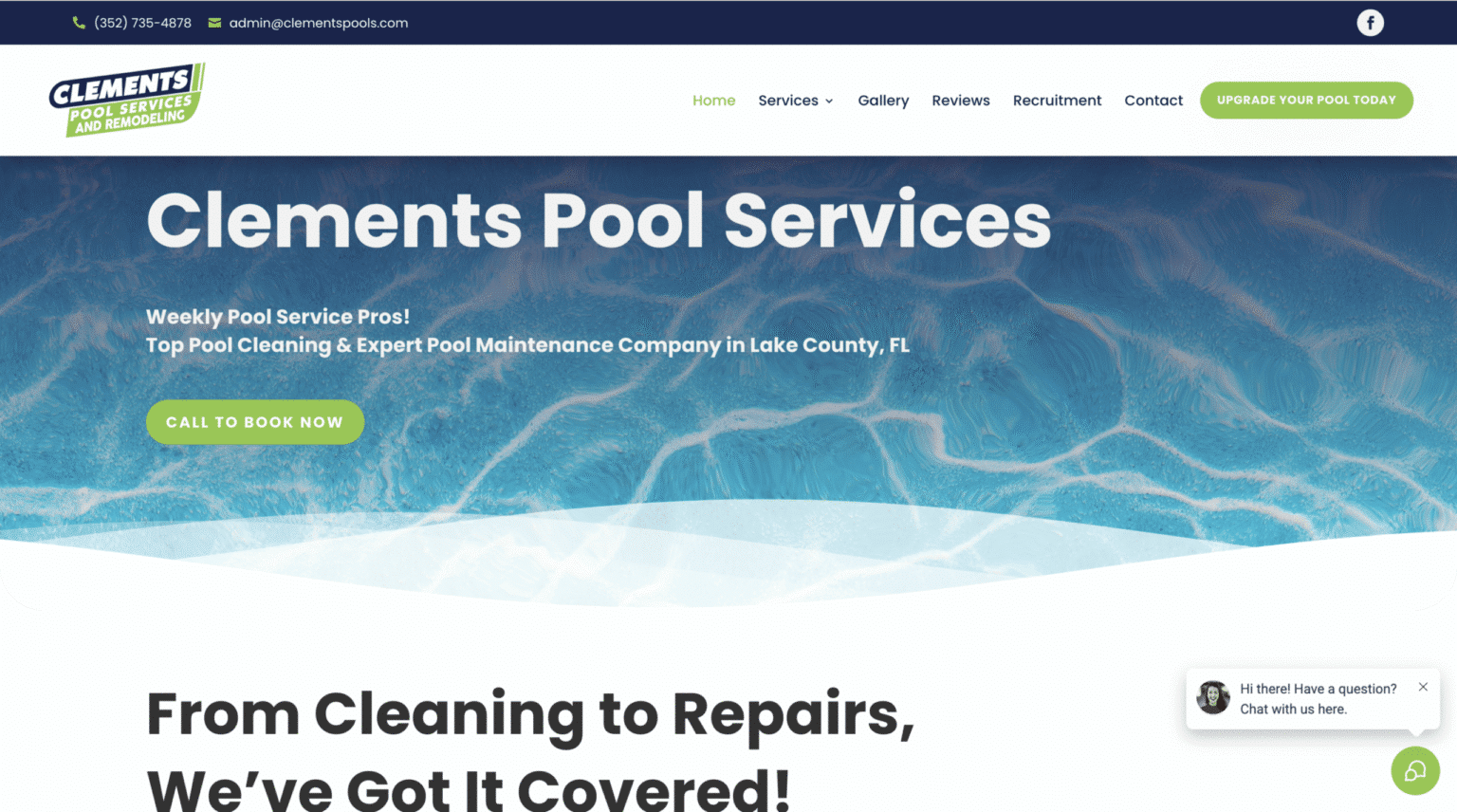
A strong contractor homepage does not need to be clever. It needs to be clear. The top of the page should tell people what you do, where you do it, and what to do next. If you install and repair HVAC systems in Houston and nearby suburbs, say that plainly. If you are a roofing contractor focused on storm damage and replacement, say that plainly too. If your best leads are kitchen remodels in certain ZIP codes, make that visible.
This is where many sites stumble. They try to sound polished instead of useful. A headline like “Quality You Can Trust” sounds nice, but it says almost nothing. A better headline names the service and the market. Visitors should not have to interpret your business.
Mobile comes first because that is where the pressure is
For home service companies, a mobile-first design is not some trend-box to check. It is practical. Many people who visit your site are on a phone, often in a moment of urgency, sometimes standing in the driveway, the attic, the mechanical room, or the kitchen with a problem in front of them.
On a phone, weak design gets exposed fast. Tiny text, awkward menus, giant image banners, and hard-to-tap buttons all become conversion killers.
A mobile-first site should make contact frictionless. That means the phone number is tap-to-call. The main quote button is easy to see. The contact form is short. The page loads Scalable Websites quickly. Photos fit the screen correctly. Address, service area, and hours are easy to find. If you have a local number, use it consistently. That helps with trust and contactability.
I have seen contractor sites where the desktop version looked acceptable, but on mobile the quote form stretched awkwardly, the phone number was just text instead of a tap-to-call link, and the service area was hidden three clicks deep. Those are not design details. They are lost leads.
Speed is not just technical, it is emotional
Homeowners do not talk about “site performance” the way web people do. They talk about a site feeling slow, clunky, or annoying. Then they leave.
Fast load speed matters because attention is fragile. If your homepage takes too long to show the main content, if gallery images drag the whole page down, or if popups block the screen before the visitor even sees your phone number, you are making it harder for people to hire you.
Contractor websites often get heavy for predictable reasons. Huge uncompressed images. Fancy animations. Too many scripts from tracking tools, widgets, and plugins. Video backgrounds that add more decoration than value.
The fix is rarely glamorous. Use properly sized images. Keep the layout simple. Be selective about add-ons. Put the speed budget ahead of visual tricks. Home service buyers care much more about seeing your reviews, your services, your service area, and your contact options than they care about a dramatic homepage effect.
The best lead generation tool on the site is often the boring one
It is amazing how many quote forms ask for too much.
If someone needs a plumber, electrician, roofer, or HVAC tech, they usually do not want to fill out a mini application. A long form feels like work. A short form feels like help.
At minimum, most quote request forms should ask for the essentials needed to follow up: name, contact info, service need, and location. In some trades, you may need one more field for project type or preferred timing. Beyond that, every extra field needs a real reason to exist.
Here is a simple rule I give business owners. If your office would still call the lead without knowing the answer to a field, that field probably does not belong on the first form.
There is also a timing issue. Some companies treat the website form like a message box and get back to people hours later, or the next day. That defeats the point. If your competitors answer faster, they often win, even if your workmanship is better. The website and your response process have to work together.
That is why missed-call text-back and chat tools can be so helpful when used correctly. If someone calls after hours or when the office line is tied up, an automatic text reply can keep the conversation alive instead of letting the lead disappear. Likewise, a website chat tool can help visitors ask quick questions without committing to a call. The caution is simple: if you add chat or automation, it still needs to lead to a real conversation. A dead-end bot is worse than no chat at all.
Trust is built with specifics, not slogans
Homeowners are letting strangers onto their property or into major projects that cost real money. Of course they look for reassurance.
Reviews help. So do project photos, clear service descriptions, accurate business information, and signs that your company is established and responsive. Consumer behavior in home services has long reflected that people compare providers, look at reviews, and try to reduce risk before making contact.
That is why Google reviews on your site matter. Not because a widget is magic, but because third-party feedback gives visitors social proof at the moment they are deciding whether to call. The same goes for before-and-after project galleries. If you remodel bathrooms, show real bathrooms. If you build pools, show completed pools. If you replace panels or install generators, show the actual finished work.
The strongest galleries are not random beauty shots. They support the buying decision. They show the types of jobs you want more of. They are organized enough that a homeowner can think, “Yes, this looks like my house,” or “That is the kind of outcome I want.”
There is a practical limit here. A gallery should not become a dumping ground. Fifty average photos with no context can feel weaker than ten strong examples. Curate what you show.
Service pages do the selling that your homepage cannot
A common contractor mistake is trying to make one page do everything.
The homepage should introduce the business and direct traffic. It should not carry the whole SEO and conversion load for every service you offer. If you do roofing repair, roof replacement, gutter installation, skylights, and storm damage work, those deserve distinct service pages. The same applies to HVAC tune-ups, AC replacement, furnace repair, ductwork, indoor air quality, water heater service, panel upgrades, drain cleaning, irrigation, hardscaping, and so on.
Dedicated service pages help in two ways. First, they let you speak more directly to the customer’s need. Second, they give search engines clearer signals about what you do. Public information on your official website can affect how your business is understood online, so the more accurate and specific your site is, the better.
Service area pages matter for similar reasons, especially if you work across a metro area with multiple cities or suburbs. Homeowners often search with a service plus a location. If you serve Sugar Land, Katy, The Woodlands, Pearland, and Houston proper, that should not be a mystery.
The mistake is creating thin, copy-paste pages that only swap city names. Those pages tend to feel fake because they are fake. A useful service-area page should reflect the actual market, the actual services offered there, and the actual way customers in that location think about the work. A remodeling company may need to speak differently in an older neighborhood than a pool builder would in a newer suburban area. Specificity is what makes these pages credible.
Your Google Business Profile and website should reinforce each other
Many owners treat their website and Google Business Profile like separate projects. They are not. They should support the same message.
Your business name, phone number, hours, service details, and location information need to be accurate and consistent. If the website says one thing and the profile says another, confusion creeps in. If your official site clearly states your service categories, contact information, and local market, that helps both users and search platforms understand your business better.
This is especially important for lead intent. A well-optimized presence on Google can surface key details such as location, phone number, hours, photos, reviews, and a direct action path. Your website should be the place where that visitor lands and immediately finds confirmation, not contradiction.
A small but important point: use a local phone number when it makes sense for your business. It often feels more trustworthy to local customers than a generic toll-free number floating without context.
Where contractor websites usually go wrong
After reviewing a lot of home service sites over the years, the recurring problems are remarkably consistent. They are rarely about one catastrophic flaw. More often, the site leaks opportunities from five or six different spots at once.
- The homepage is vague. It says almost nothing specific about services, location, or next steps.
- The site looks acceptable on desktop but falls apart on mobile, where many real visitors actually use it.
- Contact options are buried, forms are too long, or the office response process is too slow.
- There are no real trust signals beyond generic claims, so visitors cannot easily gauge credibility.
- Service pages and service-area pages are thin, missing, or written in a way that helps neither customers nor search visibility.
The good news is that these are fixable problems. They usually do not require a complete reinvention of the company. They require better alignment between what the customer needs in the moment and what the website actually offers.
Before-and-after galleries are underrated sales tools
In many trades, photos do more than decorate the page. They remove doubt.
This is especially true for remodeling, roofing, landscaping, pool construction, painting, concrete, exterior cleaning, and other visibly transformational work. A strong before-and-after gallery helps homeowners picture the result, but it also says something deeper: this company finishes real jobs, and the finished work holds up to scrutiny.
Even less visual trades can benefit. Electricians can show clean panel work, lighting upgrades, generator installations, and EV charger installs. Plumbers can show water heater replacements, fixture upgrades, or repipe work where appropriate. HVAC companies can show neat, professional installs and equipment setups.
The trick is to keep the gallery tied to business goals. If you want more premium outdoor living projects, do not let your gallery be dominated by basic mowing shots. If you want more full roof replacements, do not make visitors dig through unrelated images. Your website should qualify and persuade at the same time.
AI chat can help, but only if it respects the buyer
Some owners are curious about chat and automated assistants, and for good reason. When handled well, they can catch leads that would otherwise bounce. A visitor who does not want to call yet may still be willing to ask a question in chat. Someone browsing after office hours may appreciate a fast response path.
But there is a trap here. If the tool becomes too robotic, too generic, or too hard to escape, it erodes trust. Homeowners contacting a contractor want help, not a guessing game. Automation should collect basic information, answer straightforward questions, and route serious inquiries toward a human as smoothly as possible.
The best use of these tools is usually simple. Help the visitor identify the service, confirm the service area, gather contact details, and move the lead into your intake process. Keep the language plain. Do not overpromise. Do not pretend a bot is a person if it is not.
That is one reason some contractors look at managed website providers that include modern communication tools as part of the package. For example, Scalable Websites, a Houston company operating as Douloi Inc. D.b.a. Scalable Websites, offers subscription-based websites for home service contractors that include hosting, security, updates, and a dedicated project manager, along with AI features. That kind of setup can make sense for owners who do not want to piece together design, maintenance, and lead-capture tools from different vendors. It is not the only valid model, but it addresses a real operational problem.
DIY, freelancer, agency, or subscription: the honest trade-offs
There is no single right way to get a contractor website built. The best choice depends on budget, urgency, internal capacity, and how involved you want to be.
A DIY builder is attractive because the monthly cost is low and the control is high. The downside is time. Most owners underestimate how long it takes to write pages, choose images, structure services, set up forms, connect tracking, and maintain the site. A DIY site can be perfectly adequate if you are disciplined and have a clear eye for messaging, but many end up half-finished.
A freelancer can be a great fit when you find someone solid. You may get more flexibility and better personal attention than with a larger firm. The risk is variability. Some freelancers are excellent strategists and communicators. Others are mainly visual designers or technical implementers. If the person is talented but overloaded, updates can drag.
A traditional agency often brings more process, broader expertise, and stronger support capacity. That can be valuable if your company has multiple services, multiple locations, or active marketing campaigns. The trade-off is cost and sometimes complexity. Not every contractor needs a full agency relationship, especially if the site needs are straightforward.
Managed website subscriptions sit in the middle for some businesses. Instead of a large upfront build fee plus separate hosting, maintenance, and update arrangements, you pay a monthly fee for the site and ongoing service. That can be a practical model if the provider is responsive and the contract terms are reasonable. It can be a poor model if you end up locked into a weak site you do not control well.
Here is the most useful way to evaluate any option.
- Who writes and structures the service and location pages?
- How fast can updates be made when pricing, photos, hours, or service areas change?
- What happens with hosting, security, and maintenance after launch?
- How does the site handle lead capture on mobile, including tap-to-call and short forms?
- Who is accountable if the project stalls or the site underperforms operationally?
Those questions usually reveal more than the sales pitch does.
Small details that quietly increase leads
The highest-impact website improvements are often not dramatic redesigns. They are smaller fixes that reduce hesitation.
A click-to-call button that stays visible on mobile can matter. So can a short note about service hours. So can a line that confirms financing availability if that is part of your process. So can a clear statement about the exact services offered, because people want to know if you handle repair, replacement, installation, or all three.
Even wording matters. “Request a quote” and “Call now” are not interchangeable. One invites low-pressure exploration. The other fits urgent needs. Good contractor sites usually make room for both kinds of intent.
Another overlooked issue is photo quality. I do not mean expensive branding shoots, although those can help. I mean clean, real photos that prove your company exists in the real world. Team photos, trucks, jobsite images, completed work, and office or warehouse shots can all help if they are authentic and current. Grainy stock photos of smiling models in hard hats do not.
The website has to match the way your office actually works
This is where web strategy becomes practical business strategy.
If your office answers calls live during business hours, your site should encourage calling prominently. If after-hours inquiries are important, your missed-call text-back process needs to be reliable. If your sales team works from form submissions, then every form should route correctly and trigger fast follow-up. If certain jobs are more profitable than others, your homepage and service pages should reflect that instead of treating every service equally.
I have seen contractor sites generate the wrong kind of leads because the messaging was too broad. A high-end remodeler got too many handyman inquiries. A commercial fire protection company attracted residential visitors it did not serve. A landscaping firm that wanted design-build work got flooded with one-time mowing requests. The problem was not traffic. It was clarity.
A good site does not just maximize volume. It improves fit.
What a strong contractor website feels like to a customer
This may be the simplest test of all.
When a homeowner lands on the site, they should feel oriented, not lost. They should know what the company does, whether the company serves them, and how to get in touch without effort. They should see enough proof to trust the next step. They should not have to decode marketing language or fight the page layout.
That experience is what turns a website from a brochure into a lead engine.
If your current site is underperforming, do not start by asking whether it needs a fresh coat of paint. Start by asking whether it helps the right prospect take action. If the answer is no, the fix may be less about design taste and more about structure, speed, mobile usability, trust signals, and follow-up systems.
That is also why some contractors eventually move away from patchwork setups and toward managed solutions with ongoing support. In the right situation, a provider such as Scalable Websites can be a practical example of that model, especially for owners who want one team handling the site, maintenance, updates, and communication tools rather than juggling separate vendors. The important point is not the brand name. It is the operating logic behind the decision.
A home service website should bring you calls and quote requests. If it does not, it is not finished, no matter how nice it looks.
About Scalable Websites
Scalable Websites builds professionally designed, AI-powered websites for roofers, HVAC companies, plumbers, electricians, remodelers and other home service contractors, with hosting, security, unlimited updates and lead capture included in one monthly plan.
396 Mallorn Lane, Montgomery, TX 77316
Phone: (832) 979-2478
Website: scalablewebsites.com
About Scalable Websites
Scalable Websites builds professionally designed, AI-powered websites for roofers, HVAC companies, plumbers, electricians, remodelers and other home service contractors, with hosting, security, unlimited updates and lead capture included in one monthly plan.
Houston, TX · Serving contractors nationwide
Phone: (832) 979-2478
Website: scalablewebsites.com